|
Look around your home. The floor may be oak or maple; the baseboard and window sills may be clear-finished pine, poplar or cherry. Kitchen cabinets could be solid or laminated, from knotty pine, oak, maple, or cherry. With so many types of wood available, it's important to learn how to recognize and evaluate basic types of woods to recognize their strengths and weaknesses.
For a quick primer on how various types of wood compare to each other, check out this handy wood species chart.
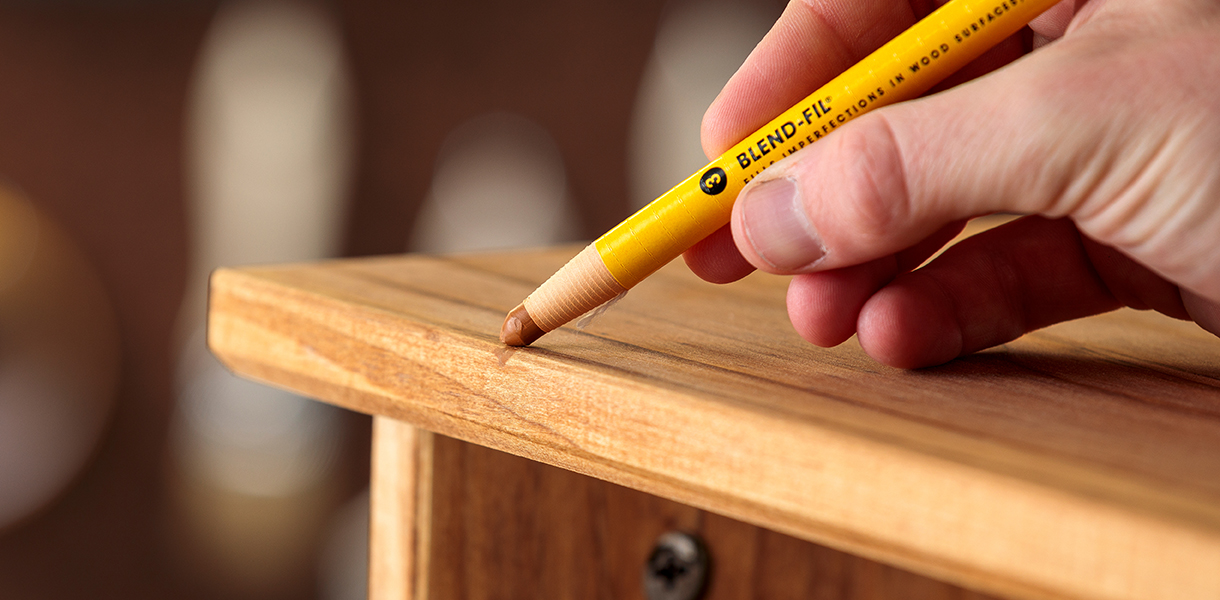
Before making your purchase, think about how you intend to use the wood. When choosing the actual piece of wood, check for any twists or warping. Look for splits at the ends of the board and surface defects like knots. Look for machine marks, insect holes, dents, and shipping scars. Will these defects affect how you intend to use the wood? Compare the different types of grain patterns. Try to match grain patterns in boards that will be used next to one another, since differences will become more pronounced once you brush on a coat of stain. Finally, once you've made your decision, be sure to measure the wood before you buy it.
Before starting any wood finishing project, it is important to have a proper workspace and supplies. When creating the ideal area, keep the following in mind:
There are a number of items frequently used in wood finishing projects. This list does not include all the supplies needed, but what is most commonly used. Always consult the label of the Minwax® products you are using to see if special application tools are required.
For best results and your own safety, always read and follow all label warnings and instructions carefully.
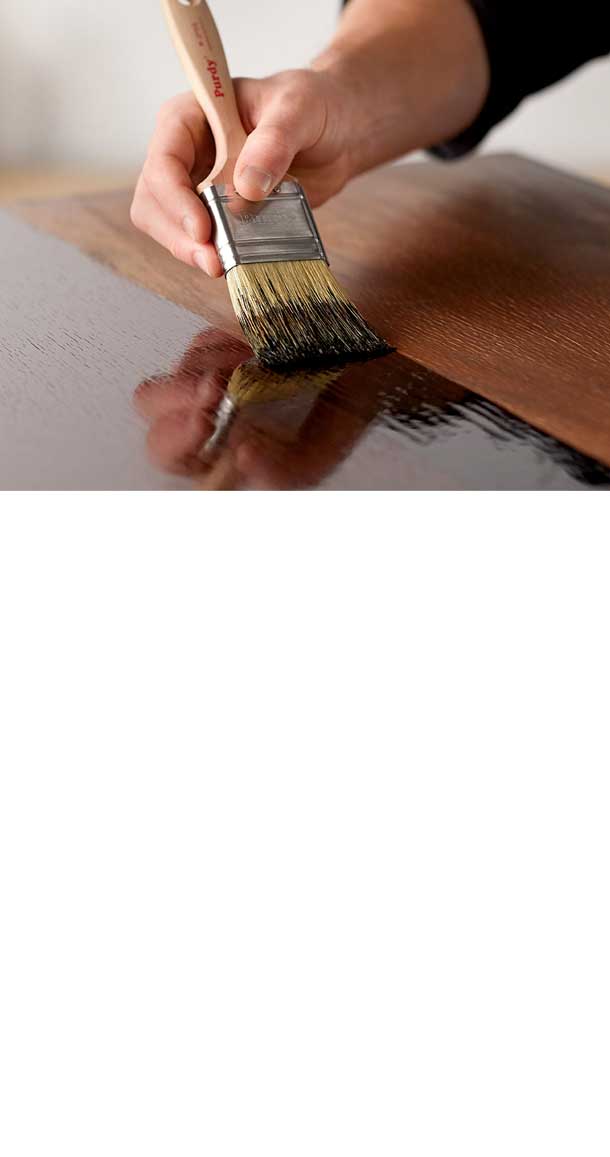
Stains may be applied with clean rags, cheese cloth, brushes, and other applicators. For best results when using a brush, make sure it is a high-quality one. Why?
What are the characteristics of a high-quality brush?
Minwax® offers high-quality natural and synthetic bristle brushes specifically designed for use with Minwax® wood finishing products:
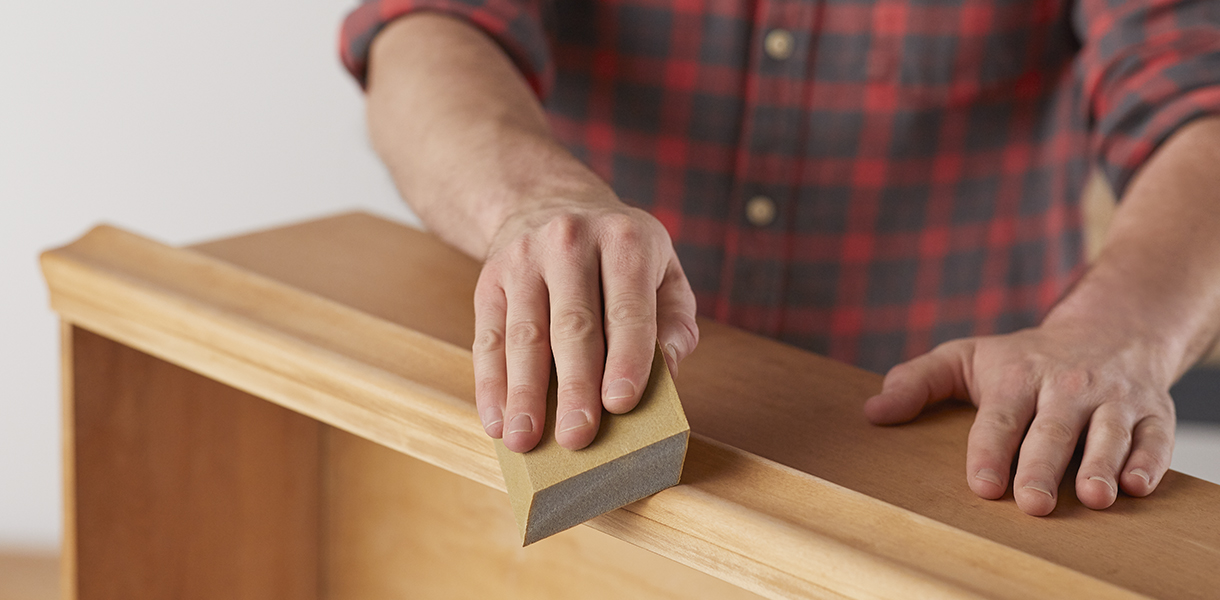
One of the most important steps in wood finishing is sanding. A thorough sanding is often what separates "acceptable" results from "professional looking" results. Start with a medium grade of sandpaper (e.g. #120) and gradually work your way to a finer grade (e.g. #220). Sand in the direction of the grain for a smooth, uniform finish and remove all sanding dust using a vacuum, dry paint brush or cloth. Look out for dried glue, especially in the joint area. If it's not thoroughly removed by sanding, it will interfere with the staining process. End-grains (areas where the wood has been cut against the grain), such as the front side of a table, tend to soak up more stain than surfaces cut with the grain. With additional sanding to end-grain areas, you can better control the absorption of stain.
For more preparation tips and tricks, check out The Basics of Proper Wood Preparation.
The final color result is determined by four factors: the color of the stain selected; the nature of the wood and how porous it is; how long the stain is left on, from a few seconds to a maximum of 15 minutes; and the extent of wiping when removing excess stain. Choose from over 100 stain colors, using the online Minwax® Stains Color Guide or a sample wood chip board at your local Minwax® retailer. But remember: different species of wood absorb stain differently. Always test the color on a hidden section of the wood you are using.
Minwax® stains can be mixed together to create custom tones. For example, it's easy to lighten any tone of Minwax® Wood Finish™ by adding Minwax® Wood Finish™ Natural. Before mixing wood tones, look at the predominant color of the wood you are matching. Is it reddish, grayish, blondish or yellowish? Use a stain with that hue as your base and add lesser amounts of a secondary stain until you reach the desired tint or tone. Try not to mix more than three wood tones at a time. That way it's easier to control and replicate the outcome. Be sure to mix enough to complete the entire project.
You can use stains to give inexpensive wood expensive-looking appearance. But, you must use wood with a similar grain. For example, if you want to stain a less expensive wood to achieve a cherry appearance, you must use a wood like maple, which has a tight-grained pattern similar to cherry. Likewise, poplar is often used as a substitute for white oak.
For the traditional two-step finish, first stain the wood and then apply a clear protective finish. The two-step finishing system permits independent control over each step - the depth of color and the level of protection. This system is used to obtain rich, professional looking finishes on small and large projects as well as on antiques.
The first step is to add color to wood by adding stain. Choose from Minwax® Wood Finish™, Minwax® Gel Stain, or Minwax® Water Based Wood Stain and apply according to label instructions. For expert application tips and specific advice for staining some of the more popular wood types, see the guide to Staining Interior Wood.
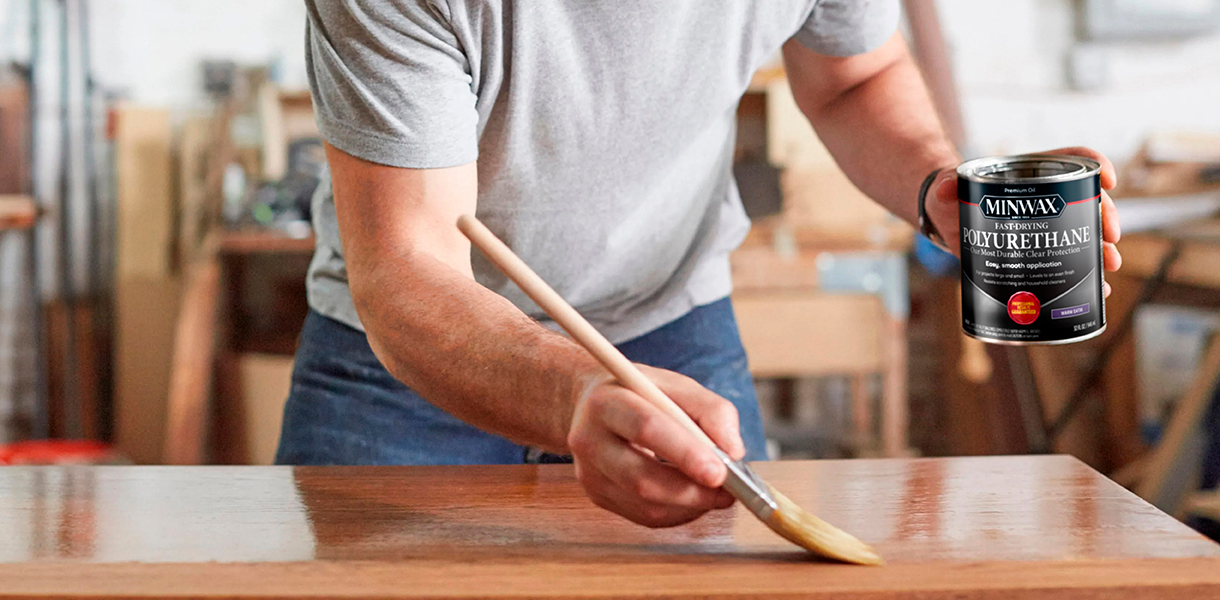
The second step in the process is to apply a clear protective finish. This protects, preserves, and enhances the natural beauty of the wood. To select the best finish for your project, check out the Guide to Clear Finishes.
Unlike the traditional two-step approach, one-step products like Minwax® PolyShades®, Minwax® Water Based WoodSheen®, and Minwax® Express Color Wiping Stain & Finish provide both color and protection at the same time. They can simplify the finishing process and reduce finishing time. One-step products are ideal for use on smaller pieces, such as decorative items that don't experience high wear and tear.
Rags, steel wool and other waste soaked with oil finishes may spontaneously catch fire if improperly discarded. Place rags, steel wool and waste immediately after use in a water-filled metal container. Tightly seal and then dispose of in accordance with local regulations. Be sure to keep the container out of the reach of children.